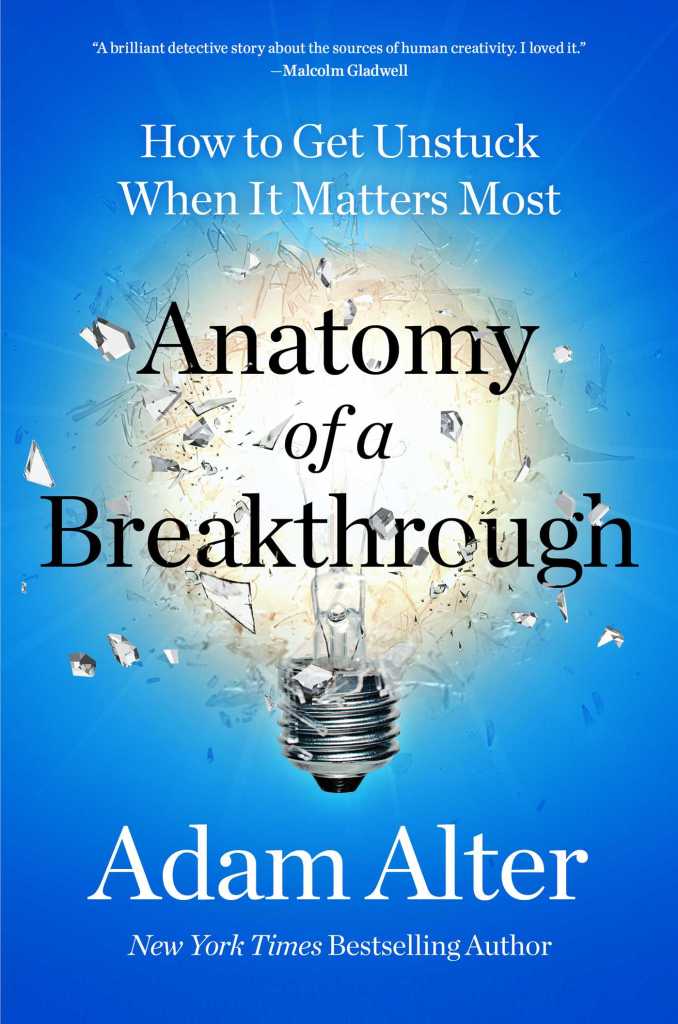
I recently finished Adam Alter’s Anatomy of a Breakthrough: How to Get Unstuck When it Matters Most. It’s a fascinating book on the research around breakthroughs of all kinds: creative, scientific, athletic, professional. One of the findings Alter describes is the way that periods of exploration followed by periods of exploitation often precede a “hot streak” or breakthrough in a career.
Exploration is permission (and intention) to play, to learn and to experiment widely outside what you already know and can do. In contrast, exploitation is the narrowing of focus, the intentional refining of a skill or approach to get really good at the thing you’re figuring out.
According to Alter (and the research), “You can’t make breakthroughs without a period of exploration, but you’ll never succeed if you don’t follow a period of exploration with precise, targeted exploitation” (200).
It’s the timing of the switch—from exploring to exploiting, and the understanding that this process is iterative rather than linear—that is so challenging. How long is too long to spend exploring? How do you recognize when you’ve rushed into exploitation before you’re ready? The examples in the book remind me so much of my own experiences as a writer.
However, neither the word “explore” nor “exploit” capture the full concept in a way that could put them in the running to be my One Little Word for 2024. Also, I tend to choose words that have multiple meanings, and those multiple meanings should be positive.
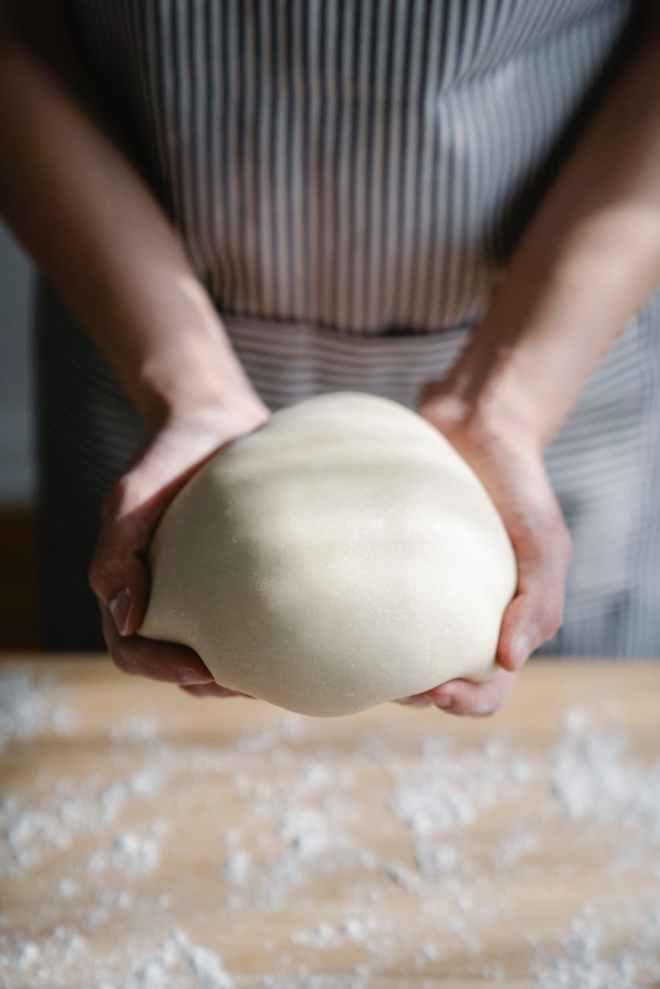
A related metaphor that does bring this explore-exploit concept to life for me is the proofing drawer. If you’re a baker—or just a fan of The Great British Baking Show like I am—this will likely translate. When baking bread, it’s necessary to create just the right conditions for bread dough to rise (or proof) before being kneaded again and/or baked: space, temperature, time, humidity, etc. Under-proof the dough by not leaving it in the drawer long enough, and your bread will be dense. The yeast needs time to do its thing. Over-proof the dough, and you’ll end up with puffy bread that lacks structure. The yeast has run amok.
(This is an oversimplification, and I confess I had to Google it to get the details right. . . but let’s see if the line of thinking holds up.)
I connect this art of the proof with knowing when to switch from an exploring stage to an exploiting stage in a creative endeavor. It’s warm and cozy in the proofing drawer—much like a phase of exploration where you’ve given yourself permission to play. For a writer, this might look like pushing the pause button on the querying process. This might include experimentation with multiple projects without the stress of deadlines. This might be close study of a new form of writing or a specific aspect of writing through reading and critical analysis. These are all worthy and necessary parts of a writer’s process. It feels good to push outside the boundaries of what you’ve done before, to stretch and double in size underneath the protective cover of that kitchen towel.
And. . . at some point, you’ve got to move that dough into the oven, crank up the heat, and see how it turns out.
There are telltale signs for bakers as well as breakthrough-seekers to be on the lookout for as they navigate the switch, and I imagine there’s a certain amount that comes down to trusting your gut. According to Alter, “Jumping from exploration to exploitation, and back again, is almost always productive. Since switching back is always an option, the only unproductive strategy is to switch too seldom” (203).
Obviously, you can’t put partially baked bread back into the proving drawer, but wIth each successive loaf, you get a little closer; your timing improves. The trick is recognizing what your results are telling you about where you are in the process and what you need next.
For example, Alter warns about misinterpreting the “near miss.” As a writer working toward publication, when does a rejection indicate the need to return to an exploring phase, and when should it spur me on to double down on where I’m exploiting? Alter advises, “Never go back to exploring when success should follow another burst or two of exploitation” (217). I know I’ve been guilty of heading back into the comfort of the proofing drawer when I should have done the opposite.
In 2024, I will have more confidence in how close I am. I will tend to the rise. I will be self-aware about engaging in stages of exploration and exploitation so that I can be more intentional in the actions I take in pursuit of my writing goals.
I’m ready to rise.
Work Cited:
Alter, Adam. Anatomy of a Breakthrough: How to Get Unstuck When it Matters Most. Simon & Schuster, 2023.
 Running to School